
UNest: Invest & Save for Kids
UNest Holdings, Inc.Finance
3.8430.00 Reviews
- Version
- 3.8.1
- Installs
- 100.00K
- Age Rating
- Everyone
Screenshots

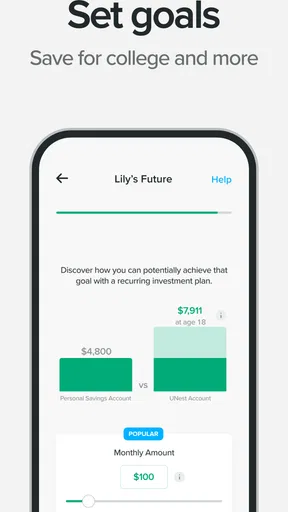


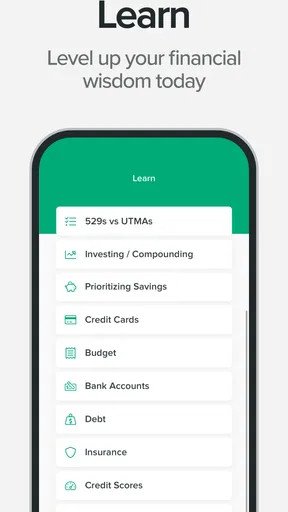
Our Review of UNest: Invest & Save for Kids
 Analysis by Appyee
Saving for a child is easy to postpone because the goal feels distant, while everyday expenses are immediate. UNest: Invest & Save for Kids takes a more focused approach: it is a finance app built around a UTMA custodial account, giving parents and other eligible adults a way to save and invest for a child rather than simply leaving money in a standard spending account. I found that this single purpose shapes the whole experience. It is less about managing every part of your financial life and more about turning a child’s future into a separate, visible plan.
That focus is the app’s main strength. The developer, UNest Holdings, Inc., has made a product for people who want a structured way to build wealth for a child but do not want to begin with a complicated investing platform. It is free to download, rated for Everyone, and currently listed as version 3.8.1 for devices running Android 7.0 or later. Optional in-app purchases range from $4.99 to $149.99 per item, so I would still check the purchase details carefully before committing to anything beyond the basic download.
A custodial account that gives a child’s goal its own place
I’d start this section by looking at how a dedicated UTMA account changes the way I think about saving: the child’s goal has a distinct place rather than competing with household spending. That separation can make a long-term intention easier to follow, but it also calls for care about which money belongs there. Next, I’d consider how that commitment fits into an ordinary family routine.
Why the UTMA structure matters
The defining capability here is the UTMA custodial account. In practical terms, this creates a financial arrangement in which an adult manages assets for a minor. That distinction matters because the money is intended for the child, not merely for a parent’s general savings balance. When I think about the difference, the biggest benefit is psychological as much as administrative: a dedicated child-focused account makes it harder to treat the goal as spare cash that can quietly disappear into unrelated expenses.
This is also why the app should not be judged like a normal budgeting tool. A budgeting app usually helps me understand where money goes each month. A general investment app may offer a broad range of securities and account types. UNest: Invest & Save for Kids is narrower. Its value comes from connecting saving, investing, and a child-specific purpose in one place. If that is the problem I am trying to solve, the narrow design feels useful rather than limiting.
The word “custodial” deserves attention before anyone opens an account. The adult is responsible for managing the account while the child is a minor, but the assets are associated with the child’s benefit. That means I would not treat this as a flexible emergency fund or as a convenient place to park money temporarily. A parent should understand the account’s legal and financial implications, including how control and future access work in their own circumstances, before making regular contributions.
What the app changes in everyday saving
The app’s real effect is that it turns an abstract promise into a repeated action. “I should save for college,” “I want to help with a first car,” or “I would like to give my child a financial head start” can remain vague for years. A dedicated investing app gives those intentions a home. Each time I open it, the purpose is easier to remember because the account is connected to a child rather than presented as another anonymous balance.
That can be especially helpful for families who receive irregular income. A fixed monthly transfer may be unrealistic for a freelancer, seasonal worker, or household dealing with changing expenses. In that situation, I would use the app as a destination for occasional contributions rather than forcing an amount that makes the rest of the budget uncomfortable. The important discipline is consistency with the family’s real cash flow, not choosing an impressive amount at the beginning and abandoning it later.
There is a useful trade-off here. A child-focused account can improve commitment, but it can also reduce flexibility. Money placed into a custodial arrangement should not be treated like ordinary savings that can be redirected whenever a bill arrives. My practical advice is to establish an emergency cushion and handle high-priority household debt first. The app is better suited to long-term money that I can leave invested than to funds I may need next month.
How I would set up a sensible routine
I would begin by defining the purpose in plain language and choosing an amount that can survive an ordinary bad month. That may mean starting with small contributions and increasing them only after the household budget proves that the routine is comfortable. The app’s free download makes it approachable, but “free” should not be confused with “costless in every possible sense”; investment products and optional purchases deserve the same careful reading I would give any financial service.
Next, I would separate the account from day-to-day spending decisions. Checking it too often can encourage emotional reactions to market movement, while ignoring it completely can allow a contribution plan to lapse. A monthly review is a sensible middle ground: confirm that contributions are still affordable, look at the account’s progress, and keep the original time horizon in mind. I would avoid changing direction simply because one short period looks disappointing.
A less obvious benefit is the conversation it can create with an older child. The account does not need to become a lesson in stock picking. Instead, I could explain that money set aside for a future goal may rise and fall while it is invested, and that building wealth usually requires patience. This makes the app more than a private parental task. It can become a practical starting point for discussing saving, risk, delayed gratification, and the difference between ownership and spending.
The family situation where it makes the most sense
The strongest use case is a parent or relative who has a long time horizon, wants the money clearly associated with a child, and prefers a guided, purpose-built experience over a broad brokerage account. Imagine a household that receives a regular paycheck but has never maintained a separate investment plan for its child. With UNest, the adult can make the goal visible, contribute when the budget allows, and review the account as part of a wider family money routine.
It can also suit relatives who want to contribute to a child’s future without handing over spending money today. A grandparent, for example, may prefer the idea of building an asset for later rather than giving small cash gifts that disappear immediately. The important point is that the adult contributor should understand the custodial arrangement and coordinate with the child’s parent or guardian where appropriate. A warm intention does not remove the need for clear ownership and communication.
For a family with several children, the dedicated purpose may make planning easier because each child’s savings goal can be considered separately. I would still be careful about fairness. Equal contributions are not always the same as equal outcomes when the children are different ages or when the accounts have different amounts of time to grow. The app can support the saving habit, but it cannot make those family decisions for me.
Where it sits beside familiar alternatives
Compared with a regular savings account, the app’s investment orientation offers a chance for long-term growth but also introduces market risk. A bank account may feel simpler and more stable for money needed soon. I would choose the ordinary savings route for a short deadline or a goal where preserving the exact balance matters more than pursuing growth. I would consider UNest for money that has time to remain invested and for a family that accepts that balances can fluctuate.
Compared with a general brokerage app, UNest is more approachable for someone who does not want to assemble a child-focused plan from scratch. A broad brokerage platform may be better for an experienced investor who wants extensive control, more account types, or a wider toolkit. That flexibility can be valuable, but it also places more responsibility on the user. UNest’s appeal is the opposite: fewer distractions and a clearer connection between the account and the child’s future.
Compared with a standard education savings product, a UTMA account may offer a different kind of flexibility because the money is not framed solely around one educational path. That can matter when I do not know whether a child will attend college, pursue training, start a business, or need support for another adult milestone. On the other hand, a dedicated education account may be preferable for a family whose objective is specifically education and who has researched the relevant tax treatment. The right choice depends on the goal, not on which app looks easiest to open.
Trade-offs I would consider before contributing
The first friction is commitment. Once I mentally label money as belonging to a child, I should not plan to reclaim it for an unrelated purchase. This is a meaningful limitation for households whose finances are still unstable. If rent, medical costs, or high-interest debt regularly create emergencies, I would prioritize those issues before using a custodial investment account. A polished interface cannot compensate for a contribution plan that puts basic financial security under pressure.
The second is investment uncertainty. The app presents investing as part of the saving process, but no investment approach removes the possibility of losses. A parent who expects a smooth upward line may become discouraged at exactly the wrong moment. I would think in terms of the child’s time horizon and avoid making promises about a future balance. Long-term investing can be sensible, but it still requires patience and an honest understanding of risk.
The third is cost awareness. The app itself is free to download, yet the presence of optional purchases means I would inspect the checkout screen and account terms rather than assuming every part of the experience has no charge. I would also compare the total cost and available investment choices with alternatives before making the account a permanent part of my finances. A small recurring cost can matter over many years, especially when contributions are modest.
There is also a practical question about control. A custodial account is designed around the child’s benefit, so I would not open one casually because the label sounds encouraging. Before contributing, I would make sure I understand who can manage the account, what happens as the child approaches adulthood, and how the arrangement fits local rules and my family’s estate or tax planning. Those details are not merely technical footnotes; they affect whether the product matches the outcome I want.
Who will get the most from this app
I think the greatest benefit goes to a first-time investor who needs a clear reason to begin. The child-centered design can remove the temptation to compare endless investment options or wait for the “perfect” moment. It gives the user a concrete question: what can I responsibly set aside for this child’s future? That is a more useful starting point than trying to predict markets or copy someone else’s portfolio.
It is also a good fit for a patient saver who values automation and separation. Keeping a child’s money apart from household spending can make progress easier to see and harder to spend accidentally. The app’s audience is not limited to parents; relatives may find the same structure appealing when they want to contribute to a longer-term gift. In both cases, the account works best when the contributor understands that the goal is future support, not immediate access.
I would skip it if I wanted a complete personal finance command center, active trading tools, or detailed control over every investment decision. I would also hesitate if I needed the money to remain fully liquid, if I was uncomfortable with market movement, or if I had not yet built a basic emergency reserve. A conventional savings account, a general brokerage service, or an education-focused account may be a better match in those situations.
My practical verdict after weighing the experience
UNest: Invest & Save for Kids succeeds because it keeps one financial decision in view: building an investment for a child through a UTMA custodial account. That focus makes the app easier to understand than a platform designed for every possible financial task, and it gives a long-term goal a visible place in the household routine. I especially like the way the concept can turn occasional good intentions into a repeatable habit.
Still, I would not recommend opening it simply because the download is free or because investing sounds automatically better than saving. The custodial structure, market risk, possible optional purchase costs, and reduced flexibility all deserve attention. The best results will come from users who can leave the money alone, contribute within a realistic budget, and take time to understand what the account means for their family.
With an average rating of 3.8 from around 2.5 thousand ratings and more than 100 thousand installs, the app has attracted a substantial audience without being universally loved. That feels consistent with my assessment: it is a focused tool with a clear purpose, not a universal answer to children’s finances. I would recommend trying it to a parent or relative who wants a dedicated, approachable way to invest for a child and is prepared to treat the account as a long-term commitment. For anyone needing maximum flexibility or advanced investment control, I would look elsewhere.
Verdict
Strengths of UNest: Invest & Save for Kids
- Automates recurring investments, making consistent saving easier.
- Offers custodial accounts designed specifically for a child’s future.
- Provides educational content to help families understand investing basics.
- Digital account setup is convenient and avoids most paper-based paperwork.
- Allows relatives and friends to contribute through gifting features.
Limitations of UNest: Invest & Save for Kids
- Investment returns are not guaranteed and account values can decline.
- Management fees may reduce long-term returns, especially on smaller balances.
- Withdrawals and account use are subject to custodial account regulations.
- Available investment choices may feel limited for experienced investors.
- Tax treatment and contribution rules can vary by account and family situation.
Similar Picks in This Category
View All
Google Wallet
Google LLC4.3

Airtel: Recharge, Bank & Loans
Airtel4.0

PayPal - Pay, Send, Save
PayPal Mobile4.2

DANA Indonesia Digital Wallet
PT Espay Debit Indonesia Koe4.5

Binance: Buy Bitcoin & Crypto
Binance Inc.4.8

Cash App
Block, Inc.4.7
Frequently Asked Questions
What is UNest: Invest & Save for Kids, and how does it work?
UNest is a family-focused investing and savings app designed to help parents and relatives build money for a child’s future. After creating an account, you can open a child investment account, add recurring or one-time contributions, and choose from available investment options. The money is invested in a portfolio rather than kept as ordinary cash, so its value can rise or fall with the market.
Is UNest safe to use for saving and investing for a child?
UNest uses account security measures and works with financial service providers to facilitate investment accounts, but no investment platform is completely risk-free. Market investments can lose value, and account protection depends on the specific account structure and applicable regulations. Before depositing money, review the current disclosures, custodial arrangements, fees, and protections shown in the app and official terms.
How much money can I contribute through UNest?
The amount you can contribute depends on the account type, applicable annual limits, and current rules for custodial investment accounts. UNest generally supports both recurring deposits and occasional contributions, which can make it easier to save according to your budget. Contribution limits and tax treatment may change, so parents should check the latest information in the app and consult a qualified financial professional when necessary.
What fees does UNest charge?
UNest may charge account or subscription-related fees, and the underlying investment options can also have their own expenses. The total cost can depend on the plan, account type, and services selected. Since fees may change, carefully read the pricing page and account agreement before signing up. Comparing the ongoing cost with the app’s automated investing and family-saving features is especially important for smaller balances.
Can grandparents, relatives, or friends contribute to a child’s UNest account?
One of UNest’s useful features is the ability to involve family members and other gift-givers in a child’s savings journey. Depending on the current account setup, you may be able to share a gifting link or invite others to make contributions without requiring them to manage the investment account themselves. Confirm the latest gifting rules, contribution process, and any eligibility requirements before sharing the account.
